What Managing Multi-Channel Campaigns Taught Me About Growth
Over the course of my career working across enterprise retail, healthcare, and education businesses, I’ve led and overseen marketing campaigns across multiple digital platforms simultaneously. While each channel plays a role in driving awareness or acquisition, the real challenge lies in orchestrating these channels into a unified growth strategy. This article explores the key lessons I’ve learned about multi-channel marketing, budget efficiency, creative strategy, data-driven optimization, and how successful marketing leaders scale growth across complex digital ecosystems.
4 min read
Introduction
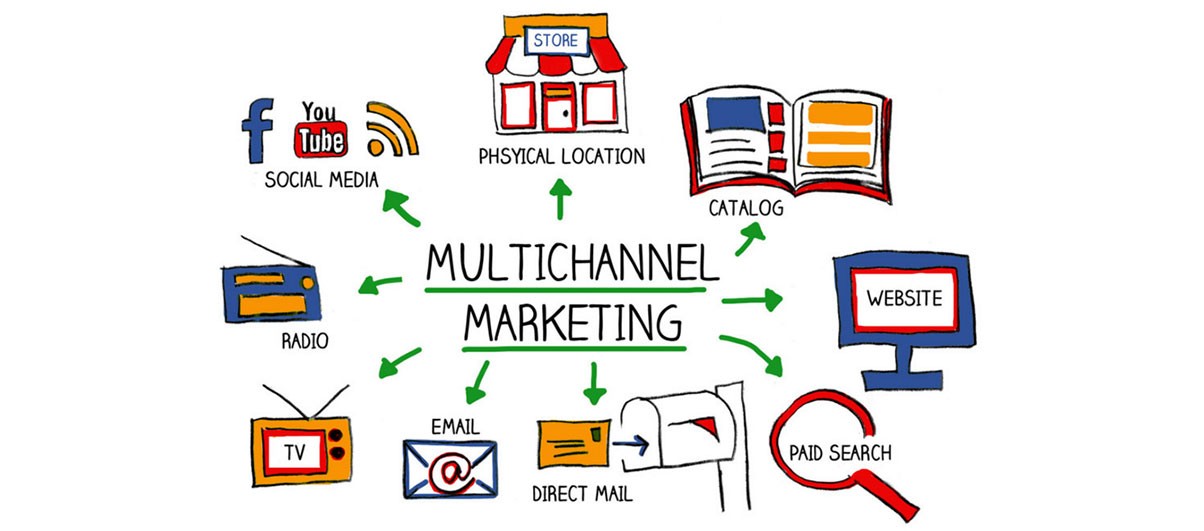
Modern marketing rarely happens within a single channel anymore. Brands today operate across a growing ecosystem of platforms — paid search, social media advertising, marketplaces, content marketing, email automation, and partnership channels. While this multi-channel environment offers unprecedented reach and targeting capabilities, it also introduces complexity.
Over the years, working across industries such as enterprise retail, healthcare services, and education, I’ve been responsible for leading campaigns that span multiple marketing channels simultaneously. What quickly became clear is that running campaigns across many platforms does not automatically lead to growth. In fact, without proper coordination, multi-channel marketing can easily become fragmented and inefficient.
True growth happens when these channels operate within a cohesive strategy, where each platform serves a specific purpose within the broader customer journey.
Understanding the Role of Each Channel
One of the most important lessons I’ve learned managing multi-channel campaigns is that not every platform should be treated the same.
Different channels naturally serve different roles within the marketing funnel.
For example:
Search platforms like Google Ads typically capture high-intent users who are actively looking for a product or service. These campaigns often operate closer to the conversion stage of the funnel.
Social media platforms such as Meta or TikTok, on the other hand, are powerful tools for discovery and audience expansion. They allow marketers to introduce products or services to users who may not yet be actively searching for them.
Meanwhile, organic channels such as SEO and content marketing contribute to long-term traffic growth and brand authority, while email marketing and CRM automation support lead nurturing and retention.
When these channels are aligned strategically, they reinforce one another. Paid campaigns drive awareness, content builds credibility, retargeting nurtures interest, and conversion campaigns close the loop.
However, when channels are managed independently without coordination, organizations often experience inconsistent messaging, inefficient budget allocation, and missed growth opportunities.
Budget Allocation Is a Strategic Decision
Another major misconception I frequently encounter is the belief that growth is primarily driven by increasing marketing budgets.
While budgets do matter, the more important factor is how effectively those budgets are allocated and optimized across channels.
In many campaigns I’ve overseen, significant improvements in performance came not from increasing spend, but from redistributing budgets toward the channels and strategies that demonstrated stronger conversion efficiency.
For example, analyzing cost-per-lead performance across different channels often reveals that certain audiences convert far more efficiently through specific platforms. By reallocating budgets based on real performance data, organizations can achieve significantly better outcomes without dramatically increasing overall marketing spend.
Budget efficiency ultimately comes down to understanding which channels drive awareness, which channels drive consideration, and which channels drive conversion.
Creative Strategy Is Often the Hidden Growth Lever
Performance marketing is often associated with analytics, bidding strategies, and targeting algorithms. While these elements are important, one factor that frequently determines campaign success is creative strategy.
Creative messaging, visual storytelling, and audience relevance often have a greater impact on campaign performance than small adjustments to bidding strategies or targeting parameters.
The most effective campaigns I’ve worked on focused heavily on aligning messaging with audience intent. Understanding what motivates different audience segments allows marketers to craft messaging that resonates more effectively.
For instance, awareness campaigns might focus on education and brand positioning, while conversion campaigns highlight clear value propositions and urgency.
Creative strategy becomes even more important in multi-channel campaigns because messaging must remain consistent across platforms while adapting to the format and behavior of each channel.
Data Should Guide Continuous Optimization
One of the advantages of digital marketing is the ability to measure performance in real time. However, data alone does not improve campaign results unless it is actively used to guide optimization decisions.
Effective multi-channel campaigns rely on structured testing frameworks.
This includes testing:
Audience segments
Creative variations
Messaging approaches
Landing page experiences
Call-to-action strategies
Over time, these tests generate insights that help marketers refine targeting, improve conversion rates, and allocate budgets more effectively.
Organizations that treat campaign data as a continuous learning process tend to outperform those that rely on static campaign strategies.
Cross-Functional Collaboration Is Essential
Multi-channel marketing often touches multiple parts of the organization. Marketing teams rarely operate in isolation, especially in larger companies or enterprise environments.
Successful campaigns often require collaboration with:
Product teams responsible for positioning and messaging
Sales teams responsible for converting leads
Analytics teams responsible for performance measurement
Operations teams responsible for customer experience
One of the most valuable lessons I’ve learned is that marketing performance improves significantly when these teams operate with shared goals and shared data.
When marketing teams align closely with business objectives and collaborate across departments, campaigns become far more effective in driving real business outcomes rather than simply generating traffic or engagement.
Multi-Channel Marketing Requires Leadership, Not Just Execution
As marketing ecosystems grow more complex, the role of marketing leadership becomes increasingly important. Managing multi-channel campaigns is no longer just about launching ads or scheduling content.
It involves strategic coordination across platforms, teams, and business objectives.
Effective marketing leaders focus on building systems that allow campaigns to scale efficiently, ensuring that each channel contributes to a unified growth strategy rather than operating independently.
Final Thought
Multi-channel marketing offers enormous potential, but only when it is managed strategically. Simply expanding the number of platforms used does not guarantee growth. Real results come from aligning channels within a structured marketing system where acquisition, conversion, retention, and analytics work together.
Over time, I’ve learned that the most successful campaigns are not defined by the number of channels involved, but by how effectively those channels are orchestrated toward a common growth objective.
Join the newsletter
Be the first to read my blogs.